Rebuilding Strength and Confidence After an ACL Injury
Recovering from an ACL (anterior cruciate ligament) injury requires more than just time—it demands a structured rehabilitation process to restore strength, mobility, and confidence in movement. Whether you've undergone ACL surgery or struggled with instability, returning to your sport safely requires progressive physical therapy and sport-specific retraining.
At Move Strong Physical Therapy in Hudson, MA, we provide location physical therapy programs designed to help athletes regain full function and return to competition. Our physical therapists in Hudson specialize in ACL rehabilitation and performance training, ensuring a safe, effective recovery with a reduced risk of re-injury.
Read more articles:
Drills for Recurrent (Chronic) Ankle Sprains
How to Get Better Shoulder Rotation
How to Best Strengthen Your Achilles
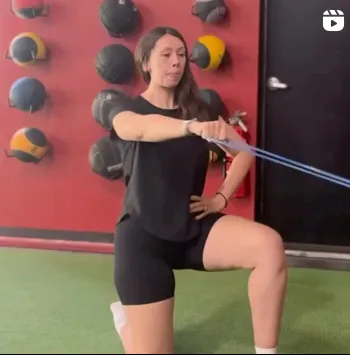
Phases of ACL Rehabilitation for a Safe Return to Sport
1. Early Recovery: Restoring Mobility and Strength
The first phase of recovery focuses on reducing pain, swelling, and stiffness while gradually regaining knee mobility and muscle activation. This phase includes:
- Gentle range of motion exercises to restore flexibility
- Isometric strength training to re-engage the quadriceps and hamstrings
- Manual therapy and soft tissue mobilization to promote healing
At our physical therapy clinic in Hudson, we ensure that athletes regain basic movement patterns before progressing to higher-impact exercises.
2. Strength and Stability Training
Once knee mobility improves, the focus shifts to building strength, neuromuscular control, and joint stability. Our physical therapists in Hudson guide athletes through:
- Progressive resistance training to strengthen the quadriceps, hamstrings, and glutes
- Single-leg stability drills to improve balance and knee control
- Core and hip activation exercises to enhance lower-body alignment
This stage is critical for preventing future ACL injuries and improving movement efficiency.
3. Sport-Specific Movement Retraining
To transition from rehabilitation to sport, athletes must retrain movement mechanics that are essential for cutting, pivoting, sprinting, and jumping. Our location physical therapy approach includes:
- Jump landing mechanics training to reduce knee stress
- Deceleration drills to teach controlled stopping and direction changes
- Agility and lateral movement drills to mimic game-time movements
By reinforcing proper biomechanics, we help athletes regain confidence in explosive and high-impact movements.
4. Return to Sport Testing and Injury Prevention
Before an athlete is cleared for full return to competition, they must pass a series of functional tests assessing:
- Knee strength symmetry compared to the uninjured leg
- Agility, cutting, and sprinting ability
- Jumping mechanics and landing control
At Move Strong in Hudson, MA, we provide comprehensive return-to-sport assessments to ensure that each athlete is physically and mentally prepared for competition.
How Move Strong Supports ACL Recovery and Return to Sport
Our physical therapy clinic in Hudson takes a personalized, science-driven approach to ACL rehabilitation. With expertise in strength training, biomechanics, and movement re-education, we help athletes:
- Reduce re-injury risk with targeted training
- Improve speed, agility, and coordination
- Regain confidence in knee stability and movement
Start Your ACL Recovery Journey with Move Strong in Hudson
If you're recovering from an ACL injury and want to return to sport safely and effectively, our physical therapists in Hudson can help. At Move Strong, we offer expert physical therapy and performance training to ensure a strong, confident comeback.
Contact our physical therapy clinic in Hudson today to schedule an ACL rehabilitation assessment and take the next step toward getting back in the game stronger than ever.